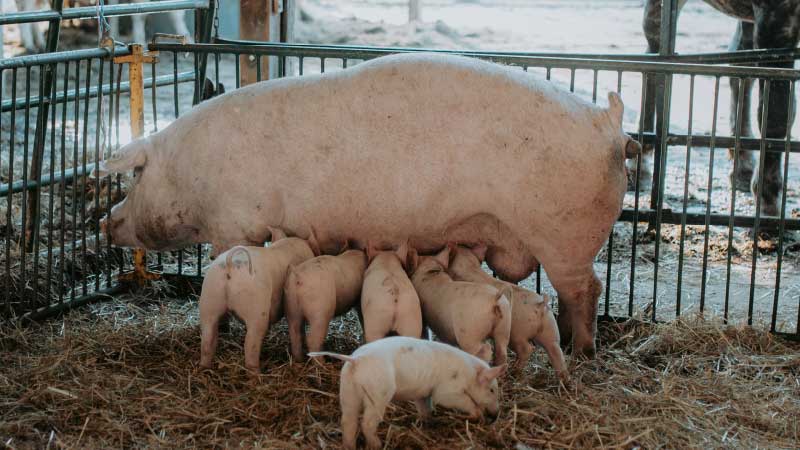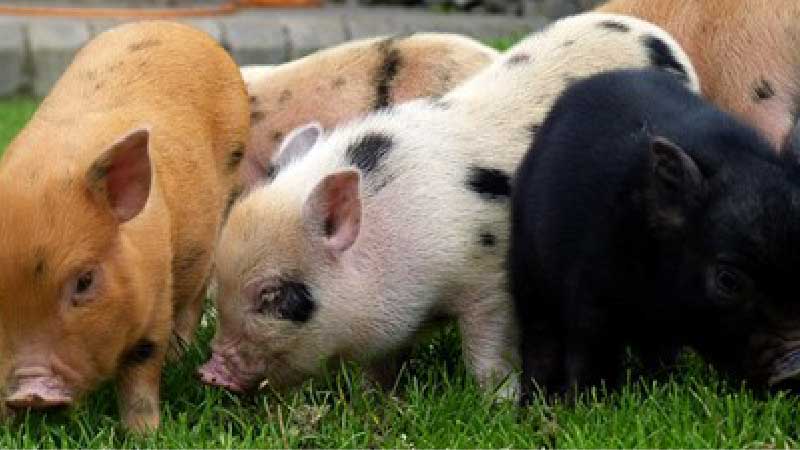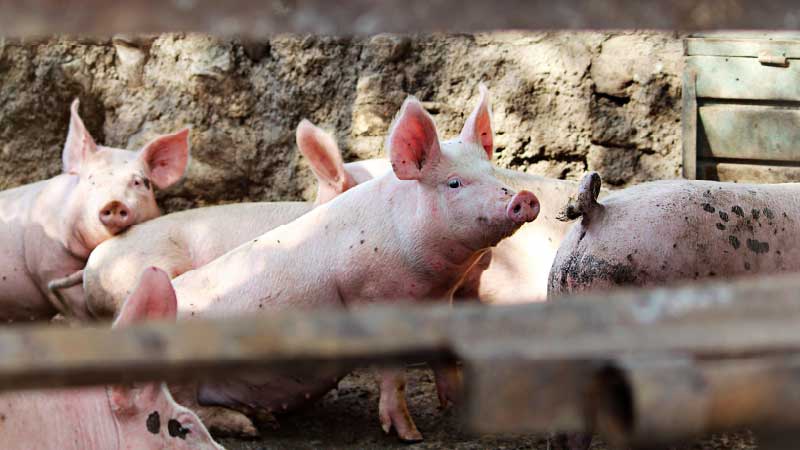
Breeding decisions are the slowest-lever but highest-impact decisions in pig farming. A bad breeding choice takes 12-18 months to show its consequences (one full generation), and another 12-18 months to correct. This article explains the two fundamental breeding strategies - linebreeding and crossbreeding - their pros and cons, and how to choose between them for your specific situation. The wrong choice compounds: every generation gets worse. The right choice compounds too: every generation gets better.
The two strategies defined
Linebreeding is the controlled mating of related animals to concentrate the genes of a particularly outstanding ancestor. The classic linebreeding pattern: a grandson is mated to a granddaughter of the same exceptional boar. This keeps that boar's influence at 25-50 percent in the next generation without going to full sibling or parent-offspring mating (which would be inbreeding).
Crossbreeding is the mating of unrelated animals, typically from different breeds. The classic crossbreeding pattern: a Large White boar is mated to a Local black sow, producing crossbred piglets that combine the size and growth of the exotic breed with the hardiness and disease resistance of the local breed.
Both strategies have legitimate uses. Neither is universally better. The choice depends on your goals, your scale, and your access to breeding stock.
Linebreeding: when it works (and when it destroys herds)
Linebreeding is the tool of breeders who want to fix specific traits in a closed population. The classic use case: you have an exceptional boar (huge size, fast growth, gentle temperament, excellent feed conversion) and you want his qualities to dominate the next 3-5 generations of your herd.
Pros of linebreeding:
- Concentrates desirable traits - if your foundation boar is exceptional, linebreeding makes those traits more uniform and predictable in his descendants.
- Creates a recognizable "line" or family - your pigs become identifiable as yours, which has marketing value if you sell breeding stock.
- Requires no introduction of new genetics - lower disease risk, lower cost.
- Predictability - linebred animals are more uniform in size, growth rate, and carcass quality.
Cons and risks of linebreeding:
- Inbreeding depression: if pushed too far (parents too closely related), you see reduced litter size (drop from 12 to 8), increased stillbirths (5-15 percent of piglets born dead), reduced growth rate, and weakened immune systems.
- Fixing bad traits alongside good ones: if your foundation boar carries a hidden recessive gene for, say, hernias or inverted teats, linebreeding will express that gene in 25-50 percent of descendants within 2 generations.
- Loss of heterosis: the genetic advantage of crossbreeding (heterosis, or hybrid vigor) is lost in linebreeding. Heterosis typically gives 10-15 percent better litter size, 5-10 percent better growth, and 10-20 percent better fertility - these gains are erased when you linebreed.
Hard rule for linebreeding: never mate full siblings, never mate parent to offspring, never mate half-siblings more than once every 3 generations. If you do not have records to verify relationships, do not linebreed - you will accidentally create inbreeding depression.
Crossbreeding: the strategy that wins for commercial farmers
Crossbreeding is the standard commercial pig farming strategy worldwide, and for good reason. When you mate animals from different breeds, their offspring exhibit "heterosis" or "hybrid vigor" - traits that are superior to either parent.
Pros of crossbreeding:
- Heterosis in litter size: crossbred sows have 1-2 more piglets per litter than purebreds (12-14 vs 10-12). Over a sow's lifetime of 6-8 litters, that is 6-16 extra piglets - massive revenue impact.
- Heterosis in growth rate: crossbred piglets grow 5-10 percent faster than purebreds. Reaching slaughter weight 2-3 weeks earlier saves feed and time.
- Heterosis in fertility: crossbred sows have higher conception rates, fewer returns to estrus, and longer productive lifetimes.
- Disease resistance: crossing with local breeds (which have evolved resistance to local diseases) gives the offspring better survival rates than pure exotics.
- Complementary traits: you can combine the size and growth of Large White with the hardiness of Local, or the leanness of Duroc with the mothering ability of Landrace. Each breed contributes its strengths.
Cons of crossbreeding:
- Requires access to multiple breeds - you need to maintain 2-3 breeds or buy breeding stock from breeders who do.
- Less predictability - crossbred offspring vary more in appearance and size than linebred or purebred offspring.
- Cannot sell crossbred animals as "purebred" breeding stock (lower value if you sell breeders).
- Requires record-keeping to track breed composition of each animal - critical for the next crossbreeding decision.
The 3-breed rotational cross: the gold standard for medium-scale farmers
The 3-breed rotational cross is the most practical crossbreeding system for farmers with 20-100 sows. It captures 100 percent of available heterosis indefinitely, without requiring constant purchase of new breeding stock. Here is how it works:
- Generation 1: Breed Breed-A boar (e.g., Large White) to Local sows. Offspring are 50% Large White, 50% Local.
- Generation 2: Breed Breed-B boar (e.g., Duroc) to Generation 1 females. Offspring are 50% Duroc, 25% Large White, 25% Local.
- Generation 3: Breed Breed-C boar (e.g., Landrace) to Generation 2 females. Offspring are 50% Landrace, 25% Duroc, 12.5% Large White, 12.5% Local.
- Generation 4: Go back to Breed-A boar (Large White). Offspring are 50% Large White (from new boar), 25% Landrace, 12.5% Duroc, 12.5% Local.
By rotating boars in a 3-breed cycle, you maintain maximum heterosis indefinitely. The system requires 3 unrelated boars (one of each breed), used in rotation. Each boar serves one generation of sows, then is replaced or sold.
The 2-breed terminal cross: the simplest system for small-scale farmers
For farmers with 5-20 sows, the 2-breed terminal cross is simpler and adequate:
- Breed a Large White boar to crossbred (50% Local x 50% Large White) sows.
- The offspring are 75% Large White, 25% Local - perfect for slaughter (fast growth, good carcass, hardy enough for local conditions).
- Replacement gilts are purchased from outside (not bred from your own stock) to maintain heterosis.
This system is simpler but requires buying replacement gilts every 2-3 years. Buy from a reputable breeder with health certificates - introducing disease via purchased breeding stock is the #1 way small farms get wiped out.
Choosing breeds: what works in tropical Africa
The four breeds most relevant to African small-scale pig farming:
- Large White (Yorkshire): the most widely used exotic breed in Africa. White, large (300-350kg mature boars), good mothers (11-13 piglets per litter), good growth (700-800g/day). Susceptible to sunburn and heat stress - needs shade.
- Landrace: distinctive long body and floppy ears. Excellent mothering ability, large litters, good growth. Less heat-tolerant than Large White. Used mainly as a maternal breed in crossbreeding programs.
- Duroc: red-brown color, very lean carcass, fast growth (900g/day). Used as a terminal sire in crossbreeding - the crossbred offspring are leaner and grow faster than either parent breed. Less common in Africa but increasing.
- Local black (various names by region): small (100-150kg mature), slow growth (300-400g/day), small litters (6-8 piglets). BUT extremely hardy - heat tolerant, disease resistant, can thrive on local feed (forage, kitchen waste, crop residues). The foundation for crossbreeding programs in Africa.
The classic crossbreeding combination for African small-scale farms: 50% Large White + 50% Local for the breeding sow, mated to a Duroc or Large White boar for terminal slaughter pigs. This gives you the hardiness of the Local, the size of the Large White, and the lean growth of the Duroc.
The breeding records you MUST keep
Without records, breeding decisions are guesses. Track for every breeding animal:
- Date of birth, breed composition, ear tag or notch ID
- Parentage (sire and dam ID)
- Litter size at birth and at weaning
- Average piglet birth weight and weaning weight
- Days to slaughter weight (or to first mating for breeders)
- Health events (illness, treatment, response)
- Culling reason (when you remove her from the herd, write down why)
Use these records to make 4 critical decisions: (1) which sows to cull (the bottom 10-15 percent of performers each year), (2) which gilts to keep as replacements (top 20 percent of females by litter size and weaning weight), (3) when to replace a boar (every 18-24 months, or when his daughters start entering the breeding herd), and (4) which sows to mate to which boar (avoid mating closely related animals). FarmWise tracks all of this automatically and flags inbreeding risks.
The 5-year breeding plan
Year 1: Start with 5 crossbred (50% Local x 50% Large White) gilts and 1 unrelated Large White boar. Breed all 5 gilts to the boar.
Year 2: The 5 gilts farrow ~10 piglets each = 50 piglets. Cull 50% of males for slaughter. Select top 20% of females (3-5 gilts) as replacements. Cull 1-2 of the original sows (worst performers). Breed remaining sows + new gilts to a NEW Duroc boar (replacing the Large White).
Year 3: Total sows = 8-10 (mix of generations). Continue culling bottom 10-15% each year, selecting top 20% of female offspring as replacements. Introduce a third breed (Landrace) boar.
Year 4-5: Herd stabilizes at 15-25 sows with rotating boars (Large White, Duroc, Landrace). All sows are crossbred. All offspring are 3-way crosses. Heterosis is maximized. Culling rate is 15-20 percent per year, replacement rate matches.
This plan turns a 5-sow starter herd into a 20-sow commercial operation over 5 years, while continuously improving genetics through culling and selection. Most importantly, the herd stays genetically healthy - no inbreeding depression, no fixation of bad traits, steady improvement in productivity.
Sources & References
- [1] Heterosis (hybrid vigor) in crossbred pigs: 10-15% improvement in litter size, 5-10% in growth rate, per FAO Animal Genetics Resources guidelines and academic literature. Source: https://www.fao.org
- [2] Cameroon local pig breed characteristics and crossbreeding programs documented by ILRI (International Livestock Research Institute) field studies. Source: https://www.ilri.org
- [3] Breed-specific traits (Large White, Landrace, Duroc) per breed society standards and OIE guidelines. Source: https://www.woah.org
FarmWise tracks all of this automatically for your farm.
Start free