Choosing a pig breed is the most important decision you will make as a pig farmer. It determines your growth rate, feed efficiency, litter size, disease resistance, and ultimately your profit per pig. A wrong breed choice can cost you 20-30% of your potential revenue over the lifetime of your operation. Yet many African farmers buy whatever piglets are available at the local market without considering whether that breed is suited to their climate, their feed resources, and their market.
The 5 Best Pig Breeds for Tropical Africa
1. Large White (Yorkshire) - The All-Rounder Champion
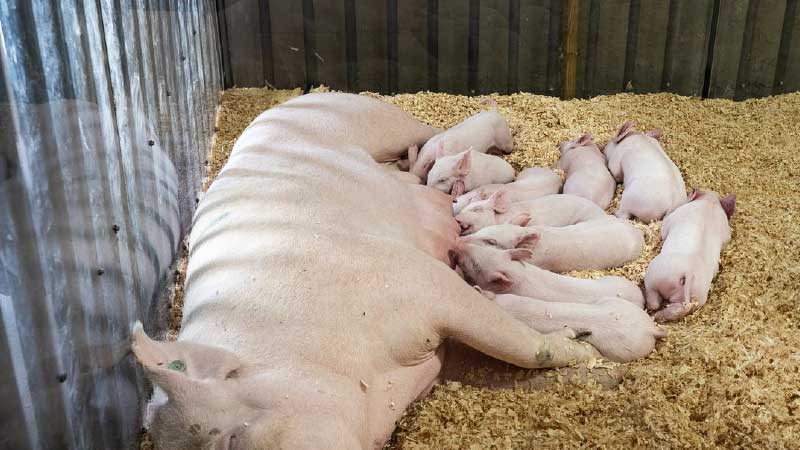
Originally from England but adapted to tropical conditions worldwide. This is the most popular commercial breed in Africa for good reason. Large Whites are large-framed white pigs with erect ears. Sows average 10-12 piglets per litter and have excellent mothering ability. They grow to 90-100kg in 6-7 months with good feed. They are hardy, adaptable to both indoor and semi-outdoor systems, and have good disease resistance.
Best for: Farmers who want a reliable, multipurpose breed for both breeding and fattening. If you can only have one breed, choose Large White.
2. Landrace - The Mothering Specialist
Originally from Denmark. Long-bodied white pigs with large floppy ears that droop over their snout. Landrace sows are exceptional mothers: they produce large litters (11-14 piglets), have plenty of teats (14-16), and have excellent milk production. Their long bodies mean they have more rib area, which translates to more bacon and loin cuts.
Best for: Breeding operations focused on producing weaned piglets for sale. Crossbreed Landrace sows with Large White or Duroc boars for hybrid vigor (heterosis). Crossbred piglets grow 10-15% faster than purebreds.
3. Duroc - The Feed Efficiency King
Red-brown pigs with drooping ears, originally from the United States. Durocs are known for exceptional feed conversion ratio (1.8-2.0 kg feed per kg gain vs 2.2-2.5 for Large White). They grow fast, produce high-quality meat (well-marbled with intramuscular fat), and are very hardy in hot climates. Their dark skin protects them from sunburn, which is a real problem for white pigs in tropical sun.
Best for: Fattening operations. Duroc boars crossed with Large White or Landrace sows produce fast-growing, feed-efficient crossbred piglets that are perfect for the African market.
4. Hampshire - The Lean Meat Machine
Black pigs with a white belt around their shoulders. Hampshires are known for producing the leanest meat of any commercial breed - less than 2% backfat at 90kg. They grow moderately fast and have decent litter sizes (9-11). They are hardy and adapt well to outdoor systems.
Best for: Farmers targeting premium pork markets (hotels, restaurants) that pay more for lean meat. Not recommended for farmers selling to local markets where fat is valued (fat pigs are preferred for traditional dishes in some regions).
5. Local/Indigenous Breeds - The Survival Specialists
Every African country has local pig breeds that have adapted to local conditions over centuries. In Cameroon, the local black pig is small (50-70kg adult weight) but extremely hardy - it can survive on kitchen scraps and forage, is resistant to local diseases, and thrives in free-range systems. The drawback: slow growth (8-10 months to reach 50kg) and small litters (6-8 piglets).
Best for: Subsistence farmers who cannot afford commercial feed. Not recommended for commercial operations because the growth rate and feed efficiency are too low for profitability.
The Winning Strategy: Crossbreeding
The most profitable approach for African farmers is crossbreeding. The classic three-way cross: Landrace x Large White sows (F1 cross) bred to Duroc boars. This produces piglets that grow 15-20% faster than purebreds, have 10-12% better feed efficiency, and are more disease-resistant (hybrid vigor). If you are starting, buy F1 Landrace x Large White gilts and a Duroc boar. This gives you the best genetics for the African market.
Breeds to Avoid in Tropical Africa
Pietrain: The muscled "bodybuilder" pig. Looks impressive but is highly stress-susceptible (porcine stress syndrome). In tropical heat, Pietrains die from heart attacks during transport or even during routine handling. Avoid.
Berkshire: Excellent meat quality but poor heat tolerance and low litter sizes (7-8). Not worth the cost in tropical conditions.
Welsh: Decent breed but not adapted to African conditions. Susceptible to sunburn and heat stress.
Where to Buy Quality Breeding Stock
Always buy breeding stock from a reputable source. In Cameroon, IRAD (Institute of Agricultural Research for Development) has breeding centers with purebred Large White, Landrace, and Duroc. Private commercial farms with good reputations are also reliable. NEVER buy breeding stock from a local market - you have no way to verify breed purity, health status, or vaccination history. A breeding boar costs 150,000-300,000 FCFA (~$500) but will sire 200+ litters in his lifetime. This is an investment, not an expense.
FarmWise tracks individual pig records including breed, birth date, parentage (sire and dam), weight history, and health events. This is essential for managing a crossbreeding program and tracking which crosses perform best on your farm.
Sources & References
- [1] Cameroon weaner piglet price: 45,000-60,000 FCFA each (2 months old, crossbred), per Instagram Cameroun Agro Service listings 2025. Source: https://www.instagram.com
- [2] Large White breed characteristics (10-12 piglets/litter, 90-100kg in 6-7 months) per breed society standards and OIE guidelines. Source: https://www.woah.org
- [3] Crossbreeding heterosis (10-15% improvement in litter size, 5-10% in growth rate) per FAO Animal Genetics Resources guidelines and academic literature. Source: https://www.fao.org
FarmWise tracks all of this automatically for your farm.
Start free