Newcastle Disease (ND) is the most devastating poultry disease in Africa. It is caused by a paramyxovirus that spreads through the air, on contaminated clothing, on feed bags, via wild birds, and through infected chicken meat. The virus is so contagious that a single sick bird can infect an entire flock of 1,000 within 24 hours. Mortality in unvaccinated flocks is 80-100% within 3-5 days of the first symptom appearing. There is no treatment. Once a bird is infected, it will either die or survive with permanent damage (twisted neck, reduced egg production).
The Vaccination Protocol (Non-Negotiable)
If you do nothing else from this article, do this: vaccinate your birds against Newcastle Disease. The protocol below is what every commercial poultry farmer in Africa follows. The cost is approximately 15 FCFA per bird per dose - less than the cost of one egg.
Day 1-7: Primer vaccination. Use Hitchner B1 (also called HB1 or La Sota strain) via eye-drop or drinking water. Eye-drop is more effective (95% take rate) but labor-intensive. Drinking water is easier (85% take rate) but requires careful management: withhold water for 2 hours before vaccination, use cool water without chlorine, and ensure all birds drink within 2 hours.
Day 14-21: Booster. Use La Sota strain via drinking water. This strengthens the immune response from the primer. The booster is critical - a single dose only provides 60% protection. Two doses provide 90%+ protection.
Day 28: Second booster. Use La Sota or a killed (inactivated) vaccine via injection (0.5ml subcutaneous). The killed vaccine provides longer-lasting immunity (6 months vs 2 months for live vaccine) but is more expensive. For layers, this is worth it because they live longer.
Every 3 months thereafter (layers only): La Sota booster via drinking water. Broilers are typically slaughtered at 35-42 days, before the next booster is needed. Layers, however, may produce for 12-18 months and need continuous protection.
Biosecurity: The Second Line of Defense
Vaccination is not 100% effective, especially if the virus challenge is overwhelming. Biosecurity reduces the viral load your birds are exposed to, giving the vaccine time to work.
- No visitors: Every visitor is a potential disease vector. If someone must enter your poultry house, provide them with clean boots (or plastic boot covers) and a clean coverall. The virus survives on clothing for up to 7 days.
- No shared equipment: Feeders, waterers, egg trays, and transport crates must stay within your farm. Never borrow equipment from another farm. If you must, disinfect it with 2% formaldehyde or 0.5% Virkon S before use.
- Control wild birds: Wild birds (especially pigeons, doves, and weaver birds) are natural reservoirs of ND virus. Net all openings to your poultry house with 2cm mesh wire. Do not allow wild birds to roost on or near your poultry houses.
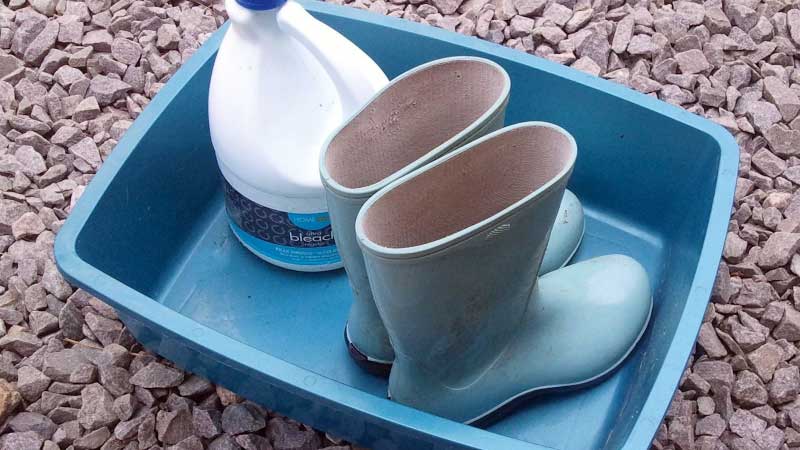
- Disinfect footbaths: Place a footbath with 2% iodine or Virkon S at every house entrance. Change the disinfectant daily - it loses potency after 24 hours, especially in sunlight. Walk through it every time you enter.
- Quarantine new birds: Any new bird brought to your farm must be quarantined in a separate house for 14 days. During this period, observe for signs of disease and vaccinate if needed. Never introduce unquarantined birds directly into your flock.
Recognizing Newcastle Disease
The incubation period is 2-6 days. Symptoms appear suddenly and progress rapidly:
- Sudden death: Many birds are found dead with no prior symptoms. This is the most common presentation in acute (velogenic) ND. Birds that looked healthy yesterday are dead this morning.
- Greenish diarrhea: A classic sign. The feces are watery and green, sometimes with white urates.
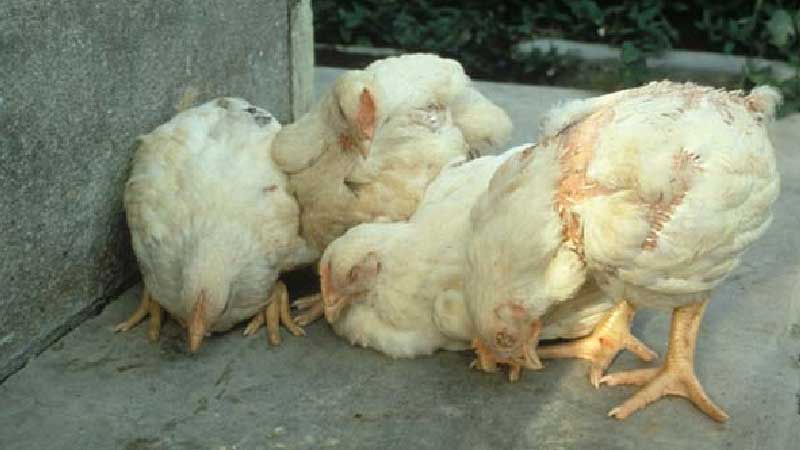
- Twisted neck (torticollis): The bird's head twists to one side or bends backward. This is a neurological sign and is almost pathognomonic for ND.
- Respiratory distress: Gasping, coughing, sneezing, and nasal discharge. Often confused with CRD (Chronic Respiratory Disease) but ND progresses much faster.
- Drop in egg production: Production can drop from 90% to 0% within 3 days. Eggs may be soft-shelled, misshapen, or have watery albumen.
- Swollen head and eyelids: The entire head may swell, giving the bird a "owl-like" appearance.
Emergency Response
If you suspect ND: (1) Immediately isolate the affected house - no one enters or leaves without full biosecurity gear. (2) Report to the nearest veterinary service (ND is a notifiable disease in most countries). (3) Vaccinate ALL other birds on the farm with La Sota via eye-drop (emergency vaccination can save birds that are not yet infected). (4) Do not sell or move any birds from the farm for 30 days. (5) After the outbreak, clean and disinfect the house with 2% formaldehyde. Leave it empty for 21 days before restocking.
FarmWise includes a complete disease reference library with Newcastle Disease and 30+ other common African livestock diseases. It also auto-generates vaccination reminders based on your batch ages, so you never miss a vaccination window.
Sources & References
- [1] Newcastle disease mortality in unvaccinated flocks approaches 100%, per multiple peer-reviewed studies and FAO field reports. Source: https://pmc.ncbi.nlm.nih.gov
- [2] Newcastle vaccine pricing in Central Africa: 50 doses for 2,500 XAF (~50 FCFA/dose), per GALVmed 2017 field report. Source: https://www.galvmed.org
- [3] Newcastle vaccination schedule and biosecurity measures per FAO Animal Production and Health Guidelines. Source: https://www.fao.org
FarmWise tracks all of this automatically for your farm.
Start free