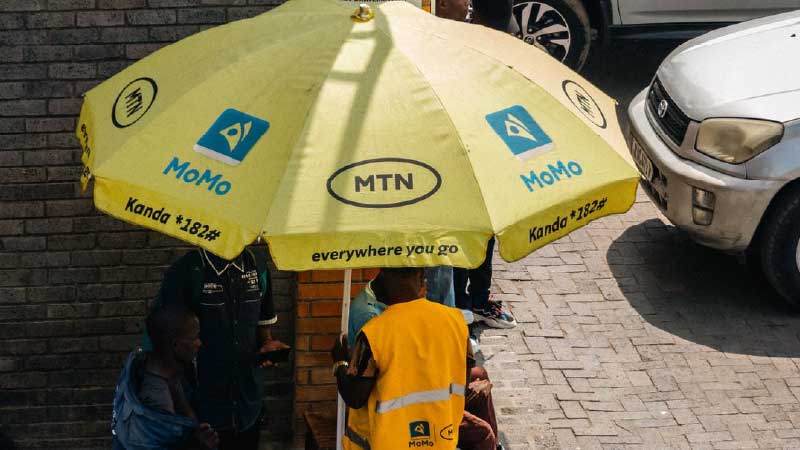
Mobile money - MTN MoMo, Orange Money, Moov Money, Wave, Airtel Money, M-Pesa depending on your country - has transformed how African farmers do business. A farmer who accepts only cash loses 5-15 percent of revenue to theft, miscounting, fake notes, and lost sales (customers who want to buy but have no cash on them). A farmer who accepts mobile money sells to a wider market, builds a transaction record that can be used to get a bank loan, and removes the risk of carrying large sums home from market. This article is the complete guide to setting up, using, and growing your farm with mobile money.
Why mobile money beats cash for farm sales
The 5 reasons mobile money is better than cash for a farmer, in order of impact:
- Safety: no cash on the farm means no theft target. No cash at the market means no robbery risk on the way home. This alone justifies the transaction fees for many farmers.
- Higher sale prices: buyers who pay by mobile money are typically wholesalers, restaurants, or institutional buyers who buy 50-500 units at a time and pay premium prices. Cash buyers at the village market typically buy 1-5 units and haggle.
- Built-in record-keeping: every transaction is recorded with date, amount, sender name, and reference. This becomes your sales ledger automatically - no notebook needed.
- Wider customer base: you can sell to customers in other cities, other regions, even other countries (within mobile money network coverage) without traveling. A WhatsApp photo + a mobile money transfer = a sale.
- Loan eligibility: mobile money transaction history is increasingly accepted by microfinance institutions and banks as proof of income. 6-12 months of mobile money sales records can unlock a business loan that no amount of verbal income claims ever could.
Setting up: which accounts you need
You need 3 things, in this order:
- A personal mobile money account on the dominant network in your area. This is your starting point - receive payments here for the first 3-6 months to learn the system and validate demand.
- A second personal account on the second-largest network in your area. Many customers have accounts on only one network; cross-network transfers are expensive (3-7% fee) and slow (sometimes 24-48 hours). Having accounts on the 2 main networks lets customers pay on whichever is cheapest for them.
- A merchant account once you are processing 500,000+ FCFA per month. Merchant accounts have lower transaction fees (1-1.5% versus 2-3% for personal accounts), allow you to accept payments from any network seamlessly, and provide professional receipts and reports. Contact your mobile money provider to upgrade - you will need your national ID and proof of business activity (a photo of your farm, a record of sales, a local council registration if you have one).
Set up the personal accounts in 30 minutes at any mobile money agent. The merchant account takes 1-2 weeks to process - start it early.
The fee comparison: what each method actually costs
For receiving 100,000 FCFA (~$167) from a customer, here are the costs:
- Cash: 0 FCFA fee, but ~5,000-15,000 FCFA (~$25.0) in implicit costs (theft risk, miscounting, fake notes, time spent counting and recounting, time spent traveling to bank the cash).
- Personal mobile money, same network: ~1,500-2,500 FCFA (~$4.17) fee (1.5-2.5% depending on provider).
- Personal mobile money, cross-network: ~3,000-7,000 FCFA (~$11.7) fee (3-7%). Avoid unless absolutely necessary - use merchant account instead.
- Merchant account: ~1,000-1,500 FCFA (~$2.50) fee (1-1.5%).
- Bank transfer: ~500-1,500 FCFA (~$2.50) fee, but customer needs your bank account details and many retail customers do not use bank transfers for small amounts.
Conclusion: merchant mobile money is the cheapest and most professional option for amounts between 5,000 and 500,000 FCFA (~$833). Below 5,000, cash is usually fine. Above 500,000, bank transfer becomes preferable.
The payment protocol: what to tell every customer
Train every customer, from the first sale, on how you accept payment. Standard script:
"Thank you for your purchase of 50 eggs at 3,000 FCFA (~$5.00). You can pay by cash now, or by mobile money to this number: [your merchant number], network [MTN/Orange/etc.]. If you pay by mobile money, please send the payment before you leave, and show me the confirmation message. I will give you a receipt with the transaction reference."
For larger sales (above 50,000 FCFA (~$83.3)), require a 30-50 percent deposit by mobile money BEFORE you deliver. This filters out unserious buyers and ensures you are not stuck with unsold product if they change their mind.
The 4 growth strategies mobile money unlocks
Once you have mobile money set up, you can grow in 4 ways that were not possible with cash-only:
- WhatsApp catalog sales: take photos of your birds, eggs, or pork. Post them to your WhatsApp status and to relevant local groups (village groups, church/mosque groups, women's groups). Customers message you, you confirm by message, they pay by mobile money, you deliver. This is how thousands of African farmers now sell their entire monthly production without ever going to a physical market.
- Subscription egg deliveries: offer weekly egg delivery to 20-50 households in your nearest town. Customers pay by mobile money every Friday, you deliver every Saturday. Steady revenue, premium price (urban customers pay 10-30% more than village market), and you build customer loyalty that survives price competition.
- Pre-orders for holiday batches: announce 6 weeks before Christmas that you are taking pre-orders for broilers at 6,000 FCFA (~$10.0) (versus 8,000 at the height of Christmas rush). Customers pay a 2,000 FCFA (~$3.33) deposit by mobile money to reserve. You get working capital to buy feed, and you have guaranteed sales. This is how you scale without borrowing from the bank.
- Group buying for input purchases: coordinate with 5-10 neighboring farmers to place bulk feed orders. Each farmer transfers their share by mobile money to the designated buyer, who then places the order with the feed supplier and arranges pickup. No cash handling, full record, transparent to all participants.
Record-keeping: making mobile money work for you
Every mobile money transaction generates a confirmation message with date, amount, sender, and reference. Save these messages - they are your sales records. Better yet, transcribe them weekly into a notebook or spreadsheet: date, customer name, product, quantity, amount. After 6 months, you have a complete sales ledger that:
- Shows your best-selling products and best customers.
- Proves your income to banks, microfinance, or government support programs.
- Helps you forecast cash flow and plan production.
- Demonstrates your business history if you ever want to sell the farm, take on a partner, or attract investment.
FarmWise integrates with mobile money transaction records - log each sale with the transaction reference, and the dashboard automatically calculates your weekly/monthly revenue, top customers, and best-selling products. No more guessing whether last month was better than the month before.
The 5 mistakes that cost farmers money
- Using a personal account for business at high volumes: personal accounts have lower transaction limits (often 500,000-2,000,000 FCFA (~$3333) per day) and higher fees above a certain monthly volume. Upgrade to merchant when you cross 500,000/month.
- Not having accounts on multiple networks: if you are MTN only, you lose the 30-40% of customers whose primary account is Orange Money or Wave. Get accounts on the 2 main networks in your area.
- Accepting payment without seeing confirmation: some customers show a fake confirmation message. Always wait for the SMS to arrive on YOUR phone before releasing the product. Train customers that this is your policy.
- Not withdrawing to a bank account: leaving large sums in mobile money is risky (account can be frozen, phone stolen, network outage blocks access). Withdraw to a bank account weekly - mobile money is for receiving, not for storing large sums.
- Not reconciling records: at the end of each week, count your mobile money balance against your sales records. Discrepancies indicate either bookkeeping errors or stolen payments (yes, family members and workers sometimes accept mobile money on your behalf and "forget" to tell you).
Tax and regulatory considerations
Mobile money transactions are increasingly monitored by tax authorities in many African countries. Once you cross certain thresholds (often 5-10 million FCFA per year in mobile money inflows), you may be flagged for tax registration. This is not a reason to avoid mobile money - it is a reason to formalize your business properly. Register as a small business, get a tax identification number, and pay the (usually modest) small business tax. The benefits of formalization - access to bank loans, government programs, larger contracts - far outweigh the tax cost.
Consult a local accountant or your country's small business support agency to understand the specific thresholds and rates. Do not evade - the long-term cost of getting caught (back taxes + penalties + loss of business license) far exceeds the tax itself.
Sources & References
- [1] MTN MoMo Cameroon fees: transfer 1-10,000 FCFA = 50 FCFA fee; withdrawal 100-4,166 FCFA = 54 FCFA fee, per mtn.cm tariffs and vadevise.com. Source: https://mtn.cm
- [2] Orange Money Cameroon fees: similar schedule to MTN MoMo, per vadevise.com comparison. Source: https://vadevise.com
- [3] Cameroon minimum wage: agricultural 45,000 FCFA/month, per wageindicator.org. Source: https://wageindicator.org
FarmWise tracks all of this automatically for your farm.
Start free